What does it actually do inside the body?
One of the most important roles your microbiome plays is in how your body responds, protects, and adapts.
This is where the connection between the gut, immune system, and inflammation begins to take shape.
The Gut–Immune Connection
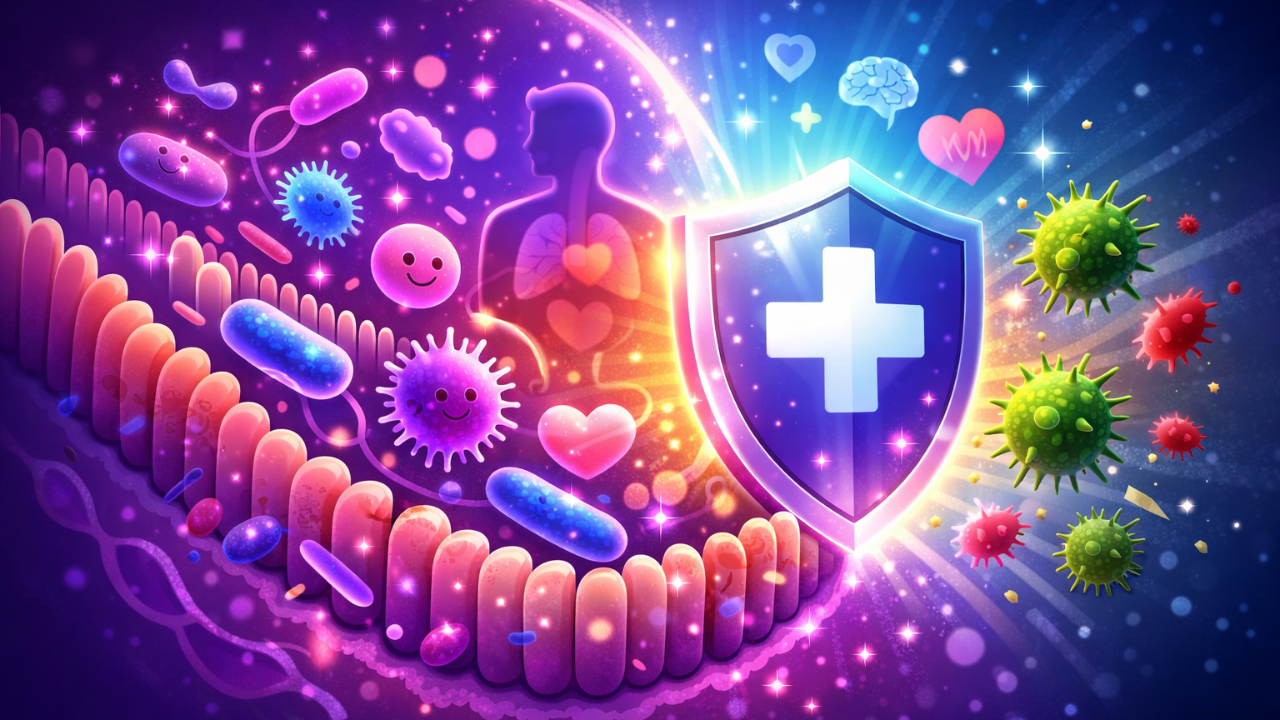
A significant portion of your immune system is closely connected to your gut, estimated to be around 70%.
This is largely due to what’s called the gut-associated lymphoid tissue (GALT), a network of immune cells that line the digestive tract.
This system is constantly interacting with:
- food particles
- microbes
- environmental compounds
Your microbiome helps guide how this system responds.
In simple terms, beneficial microbes can:
- help “train” the immune system to recognize what is harmful vs. harmless
- support appropriate immune responses
- help prevent overreaction to everyday exposures
This is part of what helps your body maintain balance by not underreacting, but not overreacting either.
The Gut Barrier: A Key Piece of the Puzzle
Another important role of the gut is acting as a barrier.
The lining of your digestive tract is designed to:
- allow nutrients to pass through into the bloodstream
- keep unwanted substances contained within the gut
Your microbiome plays a role in maintaining the integrity of this barrier.
When the microbiome is well-supported, it helps:
- strengthen the gut lining
- support tight junctions between cells
- reduce the likelihood of unwanted particles passing through
When this barrier becomes more permeable (referred to as “leaky gut”), the immune system may become more activated.
Again, this isn’t about fear.
It’s about understanding one of the ways the gut and immune system stay connected.
When the Microbiome Becomes Imbalanced
Like any ecosystem, the microbiome functions best with balance and diversity.
When that balance is disrupted (called dysbiosis) it can influence immune signaling in a few ways:
- Reduced diversity of beneficial bacteria
- Overrepresentation of less supportive microbes
- Changes in microbial byproducts that communicate with the immune system
Some of these microbial byproducts, like short-chain fatty acids (SCFAs), are especially important.
SCFAs (produced when bacteria ferment fiber) help:
- regulate inflammation
- support the gut lining
- communicate with immune cells
When these are reduced, the system may shift toward a more inflammatory state.
Understanding Inflammation as Part of Your Terrain
Inflammation is often misunderstood.
It’s not something the body is doing wrong, it’s something the body is doing on purpose.
It helps:
- protect against threats
- repair damaged tissue
- coordinate healing responses
The key is regulation.
When inflammation is:
- well-timed
- appropriate
- able to resolve
…it supports healing.
When it becomes more chronic or persistent, it can begin to influence the overall terrain in a way that is less supportive.
Your microbiome plays a role in helping regulate this balance both activating and calming immune responses when needed.
This Is Bigger Than One System
While the gut plays an important role, it doesn’t act in isolation.
Inflammation and immune function are influenced by multiple inputs, including:
- Stress → impacts gut signaling and immune balance
- Sleep → supports repair and immune regulation
- Blood sugar → influences inflammatory pathways
- Environmental exposures → interact with detox and immune systems
- Movement → supports circulation, lymphatic flow and immune activity
This is why your health is not about one “perfect” solution.
It’s about how these systems work together over time.
A More Complete Perspective
Instead of thinking:
“I need to fix my gut”
A more supportive perspective may be:
“How can I gently support the systems that are already working for me?”
Because your body is already:
- responding
- adapting
- protecting
Understanding the gut–immune–inflammation connection simply gives you another way to support that process.
Moving Forward
You don’t need to overhaul everything.
You don’t need to do it all at once.
Even small shifts over time can help support:
- microbial balance
- immune communication
- inflammatory regulation
And those small shifts are what begin to shape your terrain in a meaningful way.
If you’re looking for guidance on how to support your microbiome, immune system, and overall terrain in a way that feels realistic and personalized, I’d love to support you through 1:1 coaching as you create a plan that fits your life and your healing journey.
🌿 https://www.terrainwellnesscoach.com/1-1-coaching-offers