Your Liver Does More Than Detox: Its Hidden Role in Healthy Hormone Communication
Jul 14, 2026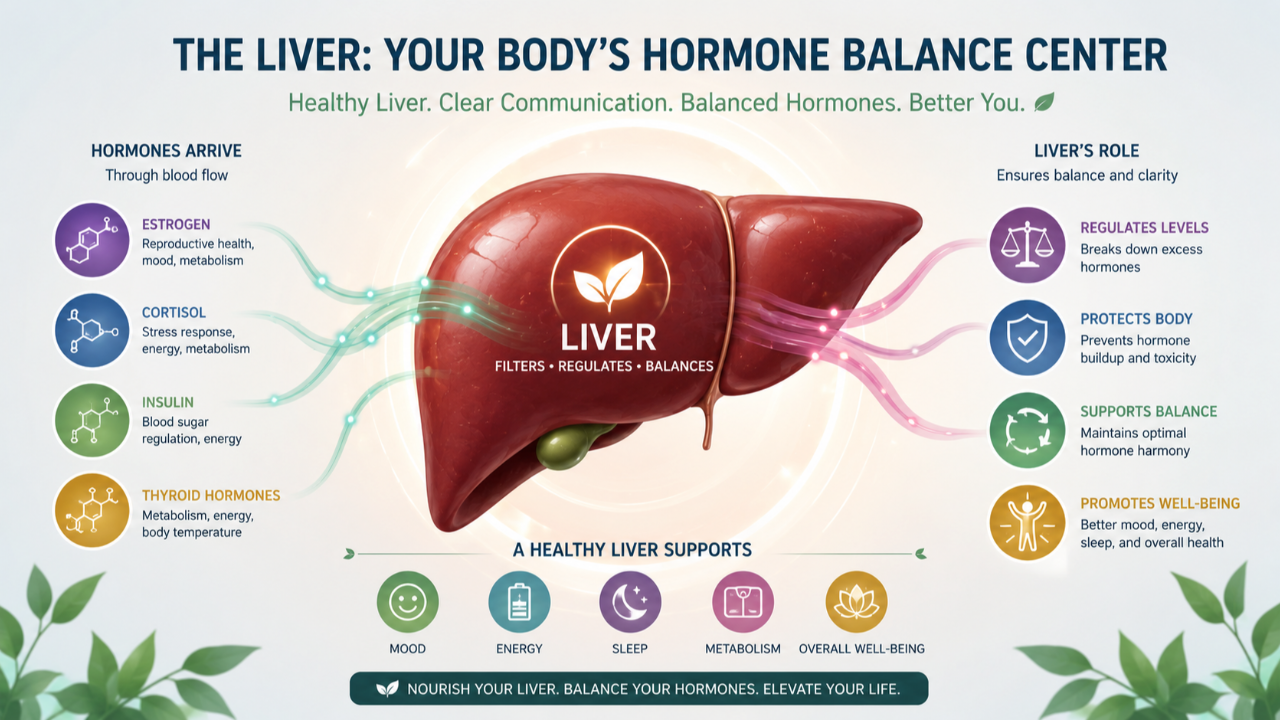
When conversations about hormone health come up, most of the attention focuses on hormone production.
How much estrogen do you have?
Is progesterone too low?
Should thyroid hormones be increased?
While hormone production certainly matters, it's only one part of a much larger conversation.
Healthy hormones depend on healthy communication. And healthy communication depends not only on creating hormones but also on processing, recycling, and clearing them appropriately once they've delivered their message.
One of the busiest and most important organs involved in that process is your liver.
Most people know the liver as the body's detoxification organ. While that's true, it barely scratches the surface of everything this remarkable organ does.
Your liver is also deeply involved in metabolism, digestion, nutrient storage, blood sugar regulation, immune function, bile production, and hormone processing.
It's one of the body's busiest communication hubs.
Understanding this role helps us move beyond the idea of "balancing hormones" and instead appreciate the many systems working together to support healthy hormonal signaling.
Hormones Don't Last Forever
Hormones are chemical messengers.
They're released into the bloodstream, travel to target tissues, deliver information, and then their job is complete.
Imagine sending a text message.
Once it's been read, you don't keep sending the exact same message over and over. At some point the conversation moves forward.
Hormones work similarly.
After they've communicated their message, many hormones must be broken down, modified, recycled, or eliminated so that new messages can be sent when appropriate.
Healthy communication depends on this continuous cycle.
If hormones linger longer than intended or aren't processed efficiently, the body's signaling can become less coordinated.
The goal isn't to eliminate hormones quickly.
It's to process them appropriately.
The Liver: Your Hormone Processing Center
Every day, your liver receives hormones circulating through the bloodstream.
Using specialized enzymes, it modifies many of these hormones into forms that can eventually leave the body through bile or urine.
This process is called biotransformation, and it occurs in carefully coordinated stages.
Rather than viewing this as "detox," it may be more helpful to think of it as preparation.
The liver takes substances the body no longer needs including used hormones and prepares them for safe removal.
This same system also processes medications, environmental chemicals, metabolic waste products, and many naturally occurring compounds produced during normal metabolism.
It's an extraordinary workload!
Supporting liver health isn't about forcing detoxification. It's about providing the body with the nutrients and conditions needed to carry out the work it already knows how to do.
Hormone Processing Doesn't End in the Liver
Once the liver prepares hormone metabolites, many enter bile.
Bile is produced by the liver, stored in the gallbladder, and released into the small intestine during digestion, especially after eating healthy fats.
Many people think bile exists only to digest fat. While fat digestion is certainly one of its major roles, bile also serves as an important transportation system.
It helps carry certain waste products including processed hormone metabolites from the liver into the digestive tract where they can eventually leave the body.
This is where another important partner enters the story.
Your gut microbiome.
The Gut-Liver Partnership
Your digestive system and liver communicate constantly.
Together they form what researchers often call the gut-liver axis.
After hormone metabolites enter the intestine through bile, one of two things can happen.
Some are eliminated through normal bowel movements.
Others may be acted upon by gut bacteria.
Certain intestinal microbes produce enzymes that can remove the chemical "tag" the liver attached to hormone metabolites. When this happens, some hormones can be reabsorbed into the bloodstream rather than eliminated.
This process is known as hormone recycling, or enterohepatic circulation.
Hormone recycling is not inherently bad. It's a normal part of human physiology and allows the body to conserve certain compounds when appropriate.
However, the balance between recycling and elimination is influenced by many aspects of overall health, including gut microbial composition, digestive function, bile flow, and regular bowel movements.
Rather than viewing the microbiome as "good" or "bad," it's more helpful to recognize that a healthy microbial community supports healthy communication throughout the body including hormone metabolism.
Fiber Does More Than Support Digestion
When most people think about fiber, they think about preventing constipation.
But fiber has far-reaching effects throughout the body.
Fiber nourishes beneficial gut microbes, helps maintain healthy stool consistency, and supports regular elimination.
As processed hormones move through the digestive tract, adequate fiber helps carry waste products out of the body as part of normal elimination.
Fiber also contributes to the production of short-chain fatty acids by beneficial gut bacteria. These compounds help nourish the cells lining the colon and support a healthy intestinal environment.
The result is a digestive system better equipped to perform its many jobs including participating in healthy hormone metabolism.
Whole foods naturally rich in fiber include:
- Vegetables
- Berries
- Beans and lentils (for those who tolerate them)
- Nuts and seeds
- Avocados
- Chia and flax seeds
Rather than chasing supplements or dramatic cleanses, consistently eating a variety of fiber-rich whole foods can gently support these natural processes.
Bile: An Often Overlooked Player
Bile deserves more attention than it usually receives.
Without healthy bile production and flow, digestion becomes less efficient, especially for fats and fat-soluble vitamins such as vitamins A, D, E, and K.
Bile also helps transport compounds prepared by the liver for elimination.
Supporting healthy bile flow begins with supporting overall metabolic health.
Eating adequate healthy fats, staying hydrated, engaging in regular movement, and maintaining digestive health all contribute to this remarkable system.
Again, the goal isn't to "flush" the liver.
It's to support the systems already designed to work together.
Nutrients Help These Pathways Function
The liver performs thousands of chemical reactions every day.
Those reactions depend on adequate nutrition.
Protein provides amino acids needed for many metabolic processes.
B vitamins help support energy production and enzyme activity.
Minerals such as magnesium and zinc participate in hundreds of enzymatic reactions throughout the body.
Antioxidants from colorful vegetables help protect cells from normal oxidative stress generated during metabolism.
This is one reason why eating a diverse, nutrient-dense diet supports so many aspects of health simultaneously.
You're not feeding one hormone.
You're supporting an entire communication network.
Everyday Ways to Support Healthy Hormone Processing
Fortunately, supporting these systems doesn't require expensive detox programs or restrictive protocols.
Simple daily habits can make a meaningful difference over time.
Consider focusing on:
- Drinking enough water throughout the day.
- Eating a variety of colorful vegetables to provide fiber and phytonutrients.
- Including adequate protein to support the liver's many metabolic functions.
- Consuming healthy fats that stimulate bile release during meals.
- Moving your body regularly to support circulation and digestive function.
- Prioritizing regular bowel habits rather than ignoring the urge to go.
- Eating meals in a relaxed state whenever possible, since chronic stress can influence digestion.
None of these habits "detox" the body.
Instead, they support the remarkable systems your body already uses every day.
Looking Through a Metabolic Lens
Hormone health isn't simply about producing more hormones or raising laboratory numbers.
It's about maintaining healthy communication.
That communication depends on the coordinated work of many systems: the liver, digestive tract, microbiome, nutrient status, circulation, and metabolism.
When these systems function well together, hormone signaling can occur more efficiently from beginning to end.
Rather than asking only, "How are my hormone levels?"
We can also ask: How well is my body processing the messages once they've been delivered?
That question opens the door to a much broader understanding of health. And that's what the metabolic approach encourages us to explore.
Healthy hormone function depends not only on production but also on healthy processing, healthy elimination, and a terrain that allows the body's communication systems to work together as they were designed.
If you are interested in more information, schedule a free Discovery Call.
Let's stay connected!
Join my free Terrain Wellness Community
or sign up for my mailing list to receive the latest news and updates.
I will never sell your information, for any reason.
