
What Disrupts the Microbiome and How to Support It Naturally
Apr 21, 2026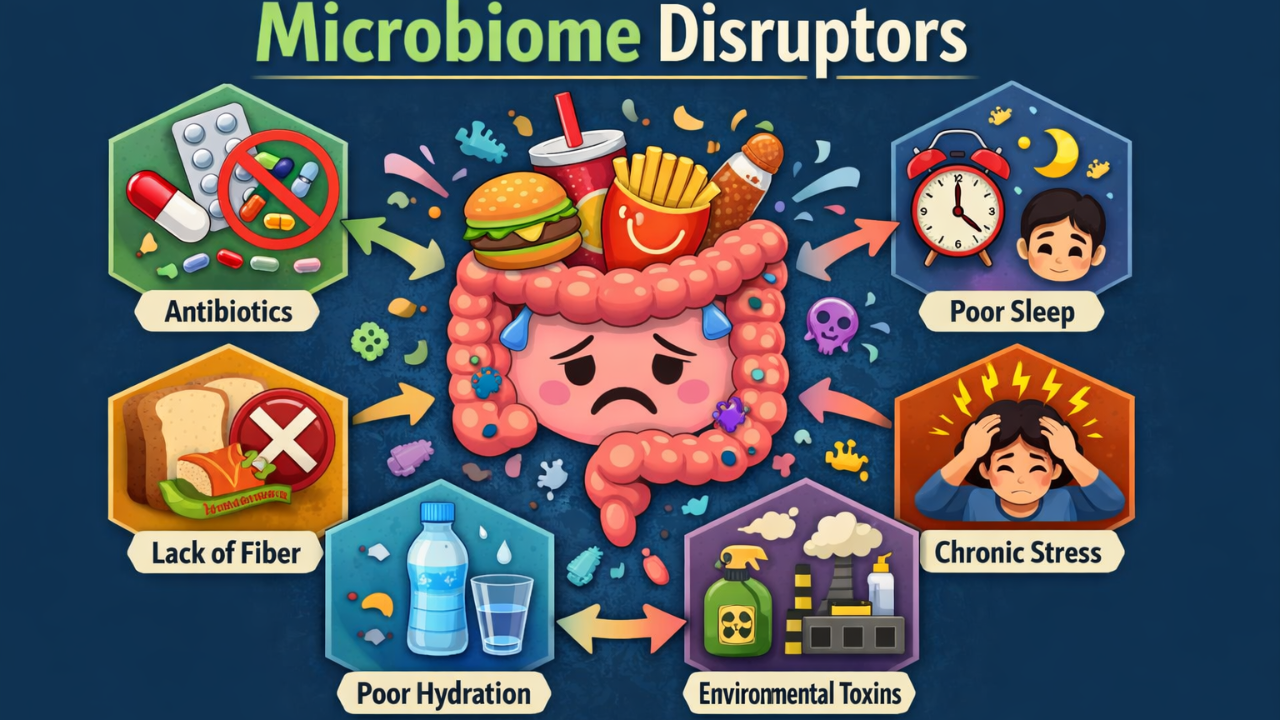
As you begin to understand your microbiome, a natural next question often becomes:
What actually affects it—and what can I do about it?
Your microbiome is not fixed.
It’s a living, responsive ecosystem that shifts based on your daily habits, your environment, and even your emotional state.
That might sound overwhelming at first.
But it can also be incredibly empowering.
Because it means small, consistent changes can begin to influence your internal terrain in meaningful ways.
This isn’t about doing everything at once.
It’s about understanding what matters… and where you might begin.
What Can Disrupt the Microbiome
There are several common factors that can influence the balance, diversity, and resilience of your gut bacteria.
The goal here isn’t avoidance or perfection.
It’s awareness—so you can make more supportive choices over time.
Antibiotics
Antibiotics can be essential and life-saving in certain situations.
However, they work broadly, meaning they reduce both harmful bacteria and beneficial bacteria in the gut.
This can lead to:
- reduced microbial diversity
- imbalance in the gut environment
- digestive changes (like bloating or irregularity)
For some people, the microbiome naturally recovers over time.
For others, it may take longer and benefit from intentional support.
Ultra-Processed Foods
Ultra-processed foods tend to be:
- low in fiber
- low in micronutrients
- high in additives, preservatives, and refined ingredients
Your beneficial gut bacteria rely on nutrients, especially fiber, to survive and thrive.
When those nutrients are lacking, it can:
- reduce beneficial bacteria
- allow less supportive bacteria to dominate
- impact how your gut produces important compounds like short-chain fatty acids
This doesn’t mean you can never have convenience foods.
But over time, the overall pattern matters.
Chronic Stress
Your gut and your nervous system are deeply connected through what’s often called the gut-brain axis.
When stress is ongoing, it can:
- slow or speed up digestion
- affect stomach acid and enzyme production
- alter the gut environment where microbes live
Stress can also influence the diversity of your microbiome over time.
This is why supporting your nervous system is not separate from gut health, it’s part of it.
Lack of Fiber
Fiber is one of the most important nutrients for your microbiome.
It acts as fuel for beneficial bacteria, allowing them to produce compounds that:
- support the gut lining
- influence inflammation
- communicate with the immune system
Without enough fiber:
- beneficial bacteria may decline
- microbial diversity may decrease
- gut resilience may be reduced
Many people are simply not getting enough fiber on a daily basis.
Environmental Exposures
We are all exposed to environmental inputs every day through:
- air
- water
- food
- personal care products
Certain exposures (like pesticides, heavy metals, and chemicals) can influence the microbiome by:
- altering bacterial balance
- increasing stress on detoxification systems
- affecting gut barrier integrity
This is not something you need to eliminate all at once.
But becoming aware of where exposures come from can help guide small, meaningful changes.
What Supports the Microbiome
Here’s the encouraging part:
Supporting your microbiome doesn’t require extreme protocols or rigid rules.
In many cases, it’s the foundational, consistent habits that make the biggest difference.
Diversity of Whole Foods
One of the most powerful ways to support your microbiome is through variety.
Different types of bacteria thrive on different nutrients.
When you eat a wide range of whole foods, especially plant foods, you provide:
- different fibers
- different polyphenols (plant compounds)
- different nutrients that support microbial diversity
Examples include:
- leafy greens
- colorful vegetables
- berries
- herbs and spices
- legumes
- nuts and seeds
Even adding one new plant food per week can begin to make a difference.
Fiber
Fiber deserves special attention because of how directly it supports gut bacteria.
When bacteria ferment fiber, they produce beneficial compounds like short-chain fatty acids, which:
- nourish the cells lining your gut
- support immune function
- help regulate inflammation
Simple ways to increase fiber:
- add vegetables to meals you already eat
- include chia or flax seeds
- choose whole foods over refined versions
Increase gradually and with hydration to support digestion.
Hydration
Water supports:
- digestion
- nutrient absorption
- movement through the digestive tract
It also helps fiber do its job more effectively.
A simple place to begin:
- start your day with a glass of water
- keep water accessible throughout the day
- Drink half your body weight in ounces daily
Stress Regulation
Supporting your microbiome isn’t just about food.
Your nervous system plays a direct role in how your gut functions.
Small practices can make a difference:
- stepping outside for fresh air
- slow, intentional breathing
- short walks
- moments of quiet or stillness
These don’t have to be long or complicated.
Consistency matters more than duration.
Sleep
Sleep is foundational for overall health and that includes your microbiome.
Poor or inconsistent sleep can:
- affect gut function
- influence hormone balance
- impact inflammation levels
Supporting sleep might look like:
- a consistent bedtime
- limit blue light exposure by turning off screens at least 1 hour before bedtime
- making your sleeping environment as dark as possible and cool (65 degrees)
- creating a calming evening routine
Even small improvements in sleep can have a ripple effect throughout the body.
A More Supportive Approach
It’s easy to look at a list like this and feel like there’s a lot to change.
Instead of asking:
“What do I need to fix?”
You might begin to ask:
“What is one area I can gently support right now?”
Maybe that’s:
- drinking more water
- adding one new vegetable
- going to bed a little earlier
- taking a short walk each day
Your microbiome responds to patterns.
Not perfection.
Not extremes.
But steady, repeated support over time.
If you’re feeling stuck or unsure where to begin, start small.
Choose one area that feels manageable.
That’s how meaningful change begins. One step at a time.
If you’d like simple, practical ways to reduce environmental exposures while supporting your body, you can download my free guide:
And if you’re looking for more personalized support, I offer 1:1 coaching where we walk through your unique situation and create a plan that feels realistic and supportive for you.
You’re also always welcome inside
The Terrain Wellness Community—a space for connection, learning, and encouragement along the way.
If you are interested in more information, schedule a free Discovery Call.
Let's stay connected!
Join my free Terrain Wellness Community
or sign up for my mailing list to receive the latest news and updates.
I will never sell your information, for any reason.
