
Oxidative Stress: What It Is and Why It Matters
Jun 02, 2026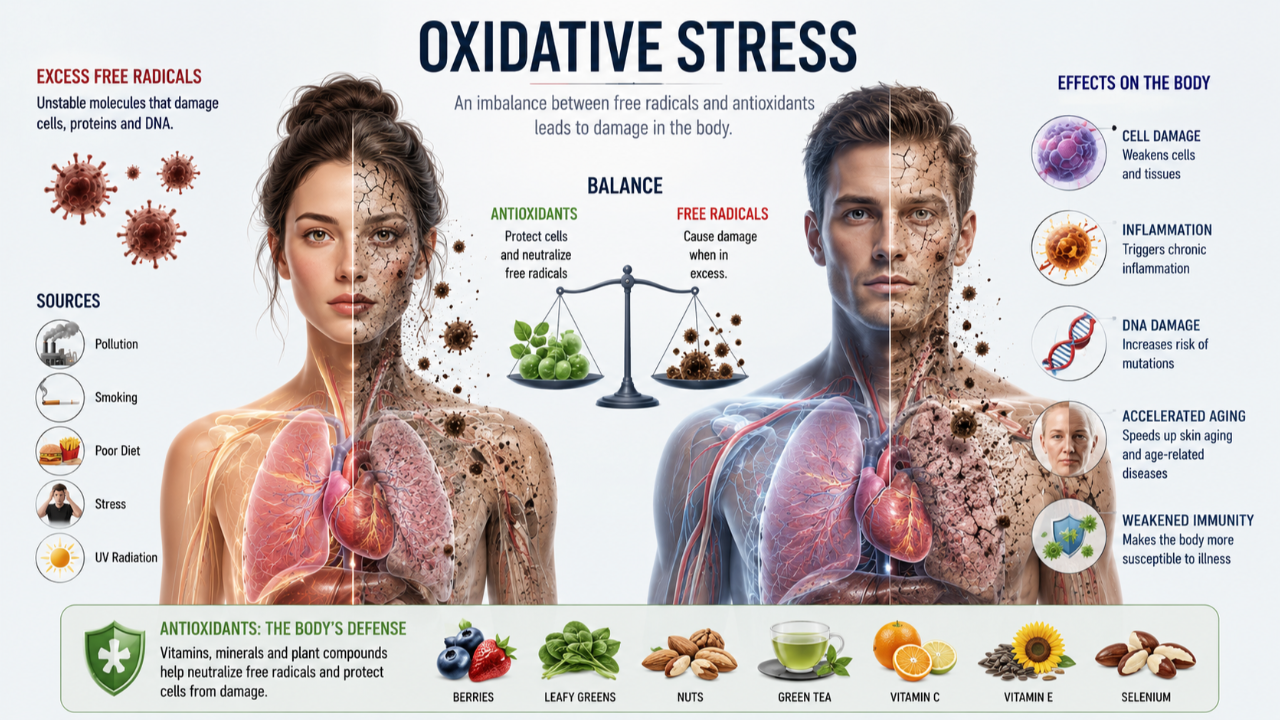
Your Body Is Constantly Balancing Damage and Repair
If you've spent any time researching cancer, chronic illness, inflammation, or healthy aging, you've probably come across the term oxidative stress.
It sounds alarming, but oxidative stress is actually a normal part of life.
In fact, every moment of every day, your body is producing molecules that can create damage and at the same time, it's actively repairing that damage.
The goal isn't to eliminate oxidative stress.
The goal is to maintain balance.
Understanding this concept can help you view your health through a more supportive and empowering lens.
What Is Oxidative Stress?
Oxidative stress occurs when the production of potentially damaging molecules exceeds the body's ability to neutralize and repair them.
Think of it like a campfire. A controlled fire provides warmth, light, and energy. But if the flames become too large or spread beyond control, damage occurs.
The same principle applies inside the body.
As we create energy, fight infections, process toxins, exercise, and simply live our daily lives, we naturally produce molecules called free radicals.
Free radicals aren't inherently harmful. They are a normal part of biology.
Problems arise when too many accumulate and overwhelm the body's repair systems.
That's oxidative stress.
What Are Free Radicals?
Free radicals are unstable molecules that are missing an electron. Because they're unstable, they seek balance by interacting with nearby cells, proteins, fats, and even DNA.
This often gives free radicals a bad reputation, but they actually perform important jobs.
Your body intentionally creates free radicals to:
- Fight bacteria and viruses
- Support immune defense
- Signal healing responses
- Help cells communicate
- Adapt to exercise and physical stress
Without free radicals, many normal biological functions would not occur.
The issue isn't their existence.
The issue is whether the body can keep them under control.
Oxidation Is a Normal Biological Process
Many people hear the word "oxidation" and immediately think something is wrong. But oxidation is simply a chemical process involving oxygen.
Every time you breathe, create energy, digest food, or use your muscles, oxidation occurs.
A familiar example is what happens when an apple turns brown after being cut. Another is how metal develops rust over time.
Inside the body, oxidation is happening continuously as part of normal metabolism. The body was designed for this.
What matters is having enough resources to repair the wear and tear that naturally occurs.
The Real Problem: When Damage Exceeds Repair
Your body is remarkably resilient.
Every day, it repairs damaged proteins, removes worn-out cells, fixes DNA errors, and produces antioxidants that protect tissues.
Problems begin when the amount of damage exceeds the body's repair capacity.
Imagine a kitchen sink. If water flows into the sink faster than it can drain out, eventually it overflows.
Oxidative stress works similarly.
When free radical production becomes excessive or antioxidant defenses become depleted, the system can become overwhelmed.
Over time, this may contribute to:
- Chronic inflammation
- Accelerated aging
- Cardiovascular disease
- Neurodegenerative conditions
- Metabolic dysfunction
- Cancer progression
This doesn't mean oxidative stress directly causes these conditions on its own. Rather, it becomes one of many factors that can influence the terrain in which health or disease develops.
Your Body Has Powerful Built-In Antioxidant Systems
One of the most encouraging truths about oxidative stress is that your body comes equipped with sophisticated defense systems.
You are not dependent solely on antioxidants from food or supplements. Your body actually manufactures many of its own protective compounds.
Some of the most important include:
Glutathione
Often called the body's "master antioxidant," glutathione helps neutralize free radicals and supports detoxification processes.
Superoxide Dismutase (SOD)
This enzyme converts highly reactive free radicals into less harmful compounds.
Catalase
Catalase helps break down hydrogen peroxide into water and oxygen, reducing cellular damage.
Cellular Repair Systems
The body constantly repairs DNA, replaces damaged proteins, and recycles old cellular components.
These systems work around the clock to maintain balance.
The goal of a healthy lifestyle is not to take over these jobs. It's to support the systems already doing them.
What Increases Oxidative Stress?
Life itself creates oxidative stress. However, certain circumstances can significantly increase the burden.
Some examples include:
Chronic Inflammation
Inflammation and oxidative stress often fuel one another.
When inflammation persists, free radical production tends to increase.
Cancer and Cancer Treatment
Cancer cells often generate high levels of oxidative stress.
Additionally, treatments such as chemotherapy and radiation may increase oxidative burden as part of how they work.
Chronic Illness
Conditions involving immune activation, metabolic dysfunction, or ongoing inflammation can increase oxidative stress over time.
Environmental Exposures
Air pollution, cigarette smoke, certain chemicals, heavy metals, and excessive UV exposure can all contribute.
Emotional Stress
The mind and body are deeply connected.
Long-term emotional stress can influence hormone balance, inflammation, sleep quality, and overall resilience.
Poor Recovery
Insufficient sleep, inadequate nutrition, and prolonged exhaustion can make it harder for the body to keep up with repair demands.
Oxidative Stress Is a Terrain Issue, Not a Personal Failure
This may be the most important takeaway.
Many people living with cancer or chronic illness begin to wonder:
"Did I do something wrong?"
"Could I have prevented this?"
"Is my body failing me?"
Oxidative stress is not evidence that you failed.
It is evidence that your body has been responding to life. Every person experiences oxidative stress.
Some simply carry a greater burden because of genetics, illness, environmental exposures, treatment history, infections, emotional challenges, or circumstances beyond their control.
Looking at oxidative stress through a terrain lens shifts the conversation from blame to support.
Instead of asking:
"What's wrong with me?"
You can begin asking:
"How can I better support my body's ability to repair, recover, and restore balance?"
That question creates space for healing.
Supporting the Body's Natural Balance
Supporting oxidative balance doesn't require perfection. Small, consistent habits often make the biggest difference.
Helpful foundations include:
- Prioritizing restorative sleep
- Eating nutrient-dense foods
- Spending time outdoors
- Managing stress in healthy ways
- Moving your body regularly
- Staying hydrated
- Building meaningful connections
- Supporting healthy detoxification pathways
These practices don't eliminate oxidative stress.
They help strengthen the body's ability to adapt, repair, and recover.
Final Thoughts
Your body is constantly balancing damage and repair.
Oxidative stress is not something to fear. It is simply part of being alive.
The good news is that your body was designed with remarkable systems to handle it.
Through a terrain-based approach, we can focus less on fighting our bodies and more on supporting the natural processes that promote resilience, healing, and balance.
Healing isn't about creating a perfect environment.
It's about helping the body restore balance one step at a time.
If you are interested in more information, schedule a free Discovery Call.
Let's stay connected!
Join my free Terrain Wellness Community
or sign up for my mailing list to receive the latest news and updates.
I will never sell your information, for any reason.
