
Building Resilience: Supporting Oxidative Balance Without Extremes
Jun 23, 2026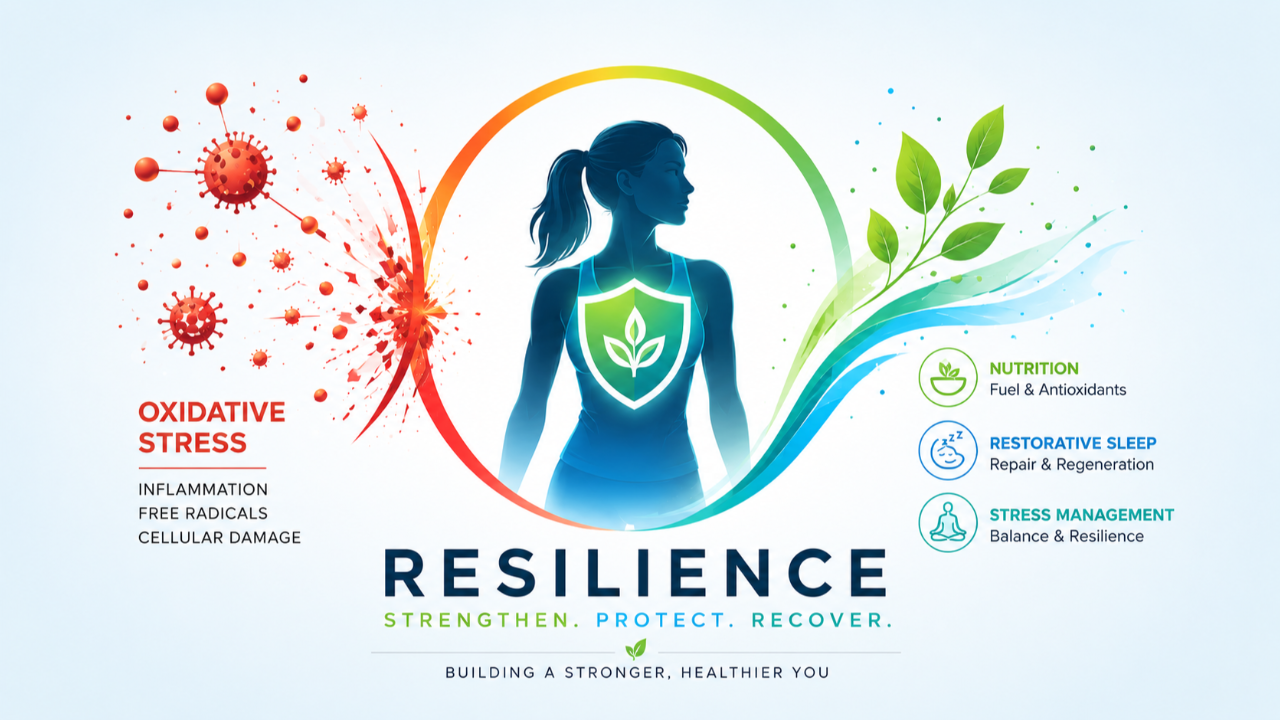
Over the past several weeks, we've explored oxidative stress from multiple angles.
We've discussed what oxidative stress is, how it relates to inflammation, the role of mitochondria in energy production, and why antioxidants are only one piece of the puzzle.
If there's one message I hope you take away from this series, it's this:
Your body was designed to handle stress.
The goal is not to eliminate every source of oxidative stress.
The goal is to build a terrain that can respond, recover, and adapt.
That's resilience.
And resilience is something that can be supported every day.
Oxidative Stress Is Part of Normal Life
The term "oxidative stress" often sounds alarming, but oxidation itself is a normal biological process.
Every breath you take.
Every step you walk.
Every time your cells produce energy.
Oxidation is occurring.
Your body continuously creates free radicals as part of normal metabolism. These molecules are involved in cellular communication, immune function, adaptation to exercise, and many other essential processes.
Problems arise when the amount of oxidative damage exceeds the body's ability to repair and recover.
This can happen during periods of:
- Chronic inflammation
- Poor sleep
- Blood sugar instability
- Emotional stress
- Environmental toxin exposure
- Nutrient deficiencies
- Illness or injury
The issue is rarely one single stressor.
It's often the cumulative burden of many small stressors over time.
Your Body Is Constantly Working to Protect You
One of the most encouraging aspects of human biology is that your body already has sophisticated systems designed to maintain balance.
These include:
- Antioxidant enzymes
- Glutathione production
- Detoxification pathways
- Immune surveillance
- DNA repair systems
- Cellular cleanup and recycling mechanisms
Your body is not passively waiting to be rescued.
It is actively working on your behalf every moment of every day.
The question becomes:
How can we support these systems rather than overwhelm them?
Focus on Reducing Unnecessary Burdens
Many people feel pressure to do everything perfectly.
Perfect diet.
Perfect supplements.
Perfect exercise routine.
But health rarely improves through perfection.
Often the greatest progress comes from removing unnecessary burdens.
Consider:
- Improving sleep quality
- Managing blood sugar more consistently
- Reducing exposure to cigarette smoke and other toxins
- Addressing chronic stress
- Supporting digestive health
- Creating healthier boundaries around work and obligations
When the body has fewer burdens to manage, it can redirect resources toward repair and recovery.
Recovery Is Where Adaptation Happens
We often focus on the things that create stress.
Exercise.
Work.
Busy schedules.
Family responsibilities.
But recovery deserves equal attention.
Your body repairs tissue during recovery.
Your brain consolidates information during recovery.
Your immune system performs important housekeeping during recovery.
Many antioxidant and repair processes are most active when the body is resting.
This is one reason sleep is so foundational.
It isn't simply "time off."
It's active biological recovery.
Recovery can also include:
- Time outdoors
- Gentle movement
- Meaningful relationships
- Relaxation practices
- Quiet reflection
- Activities that restore your energy
These aren't luxuries.
They're biological investments.
Healthy Energy Production Supports Resilience
Remember from last week's blog that mitochondria are the power plants of the cell.
Energy production naturally creates free radicals.
Healthy mitochondria are equipped to manage this process.
When mitochondria become overwhelmed, oxidative burden can increase.
Supporting cellular energy production may include:
- Eating nutrient-dense foods
- Maintaining muscle mass
- Regular movement
- Adequate protein intake
- Blood sugar stability
- Quality sleep
- Managing chronic stress
The goal isn't to force more energy.
It's to create conditions that allow energy production to function efficiently.
Nourish Your Built-In Antioxidant Systems
Instead of focusing exclusively on antioxidant supplements, consider supporting the body's own antioxidant networks.
These systems depend on:
- Protein intake
- Vitamins and minerals
- Phytonutrients from colorful foods
- Healthy liver function
- Adequate sleep
- Physical activity
- Stress management
Foods such as leafy greens, cruciferous vegetables, berries, herbs, spices, and colorful vegetables provide compounds that help support these natural defenses.
The body often responds best when given the raw materials it needs rather than trying to overwhelm the system with excessive supplementation.
Small Habits Create Long-Term Change
One of the biggest misconceptions in health is that transformation requires dramatic action.
In reality, resilience is often built through ordinary habits repeated consistently.
A nightly sleep routine.
A daily walk.
More protein at breakfast.
A few minutes of stress reduction.
Choosing whole foods more often.
Drinking enough water.
None of these actions seem revolutionary on their own.
Yet over time they create an environment that supports healing, adaptation, and recovery.
Small actions practiced consistently often outperform intense efforts that cannot be sustained.
The Terrain Perspective
From a terrain perspective, health is not measured by the complete absence of stress.
Life will always include challenges.
There will always be periods of increased demands, unexpected setbacks, and circumstances outside our control.
The goal is not to create a stress-free life.
The goal is to build a body and lifestyle that can recover from those stressors more effectively.
That's what resilience looks like.
And resilience isn't built in a day.
It's built through the daily choices that support your terrain.
Final Thought
You do not need perfect habits.
You do not need perfect labs.
You do not need a perfect environment.
Your body is designed to adapt.
The goal isn't eliminating every source of oxidative stress.
The goal is creating a terrain that can respond, recover, and thrive.
That's where sustainable health begins.
If you are interested in more information, schedule a free Discovery Call.
Let's stay connected!
Join my free Terrain Wellness Community
or sign up for my mailing list to receive the latest news and updates.
I will never sell your information, for any reason.
