
Building Reserve: Why Resilience Is the Goal—Not Perfection
Aug 18, 2026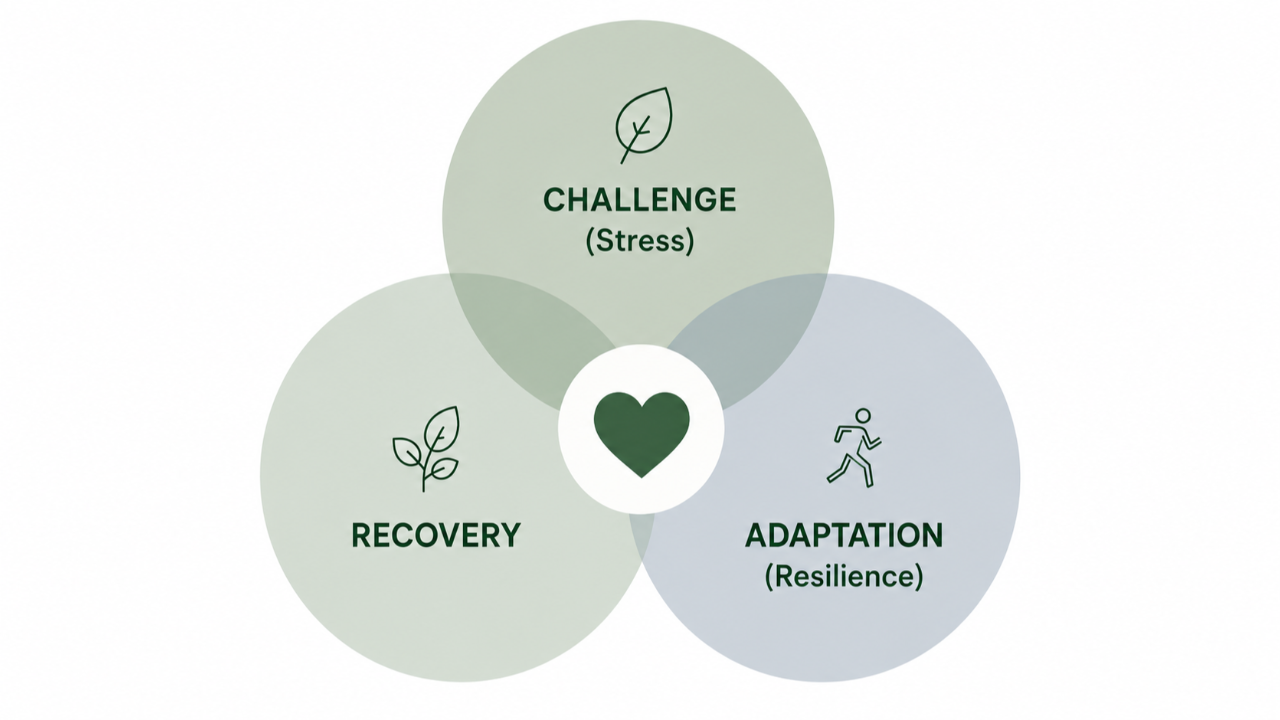
Much of the conversation around health focuses on avoiding what might harm us. Reduce stress. Avoid toxins. Control blood sugar. Improve sleep. Eat better. Exercise more.
These things matter. But there is another side of the health equation that deserves just as much attention: How well prepared is your body to handle the challenges that inevitably come?
Life will never be perfectly controlled. There will be nights when sleep is disrupted, meals that aren't ideal, periods of emotional stress, illnesses, injuries, travel, environmental exposures, and seasons when our normal routines simply aren't possible.
The goal, therefore, cannot be to create a life without stress.
A more realistic and potentially more powerful goal is to build a body with enough reserve to respond, recover, and adapt when stress occurs.
That reserve is an important part of resilience.
What Is Physiological Reserve?
Think about reserve as the capacity your body has available beyond what it needs to manage everyday life.
Your heart doesn't normally operate at its maximum capacity. Neither do your lungs, muscles, immune system, liver, or mitochondria. Healthy biological systems maintain additional capacity that can be recruited when demand increases.
This can be described as physiological reserve.
Imagine two people climbing the same hill. For one person, the hill represents a moderate challenge. Their heart rate increases, their muscles work harder, and their mitochondria produce more energy. Once the hill is over, their body settles back toward baseline.
For another person, the same hill may require nearly everything they have available.
The hill hasn't changed. The difference is the amount of capacity available to meet the demand.
We can think about many forms of stress this way. The question isn't only, "How big is the stressor?" Another important question is: "How much reserve does the body have available to respond to it?"
That distinction changes how we think about resilience.
Resilience Is More Than Tolerating Stress
Resilience is sometimes described as the ability to "bounce back." But biologically, it is more complex than simply enduring something difficult.
A resilient system can respond appropriately to a challenge, make adjustments, recover when the challenge has passed, and prepare itself for future demands.
This happens throughout the body.
Blood glucose rises after a meal and then returns toward baseline. Heart rate increases during activity and decreases afterward. Muscles experience stress during exercise and rebuild during recovery. Immune activity increases when needed and should eventually quiet when the threat has resolved.
Healthy physiology is dynamic. The body is constantly adjusting.
Problems can develop when the demand placed on the system repeatedly exceeds its ability to recover. Over time, the margin between what life requires and what the body can provide may become smaller.
Building reserve helps widen that margin.
Muscle Is One Form of Reserve
Muscle is often discussed in terms of appearance, strength, or exercise performance, but metabolically it represents something much more important. Skeletal muscle is an active metabolic tissue.
It helps use glucose, stores glycogen, communicates with other tissues through signaling molecules, supports mobility, and provides amino acids that can become especially important during illness, injury, or other physiological stress.
Maintaining muscle becomes increasingly important as we age because muscle mass and strength naturally tend to decline unless we give the body reasons to preserve them.
Walking, resistance training, carrying groceries, climbing stairs, gardening, hiking, and other forms of regular movement all communicate a similar message:
Keep this capacity available. I still need it.
Muscle isn't simply something we build for today. It is part of the reserve we may need tomorrow.
Mitochondria Help Create Energetic Reserve
Every adaptation the body makes requires energy.
Repairing tissue requires energy. Mounting an immune response requires energy. Regulating temperature requires energy. Thinking, moving, detoxifying, maintaining cellular membranes, producing proteins, and restoring balance after stress all require energy.
Much of that usable cellular energy is generated through the mitochondria. This is one reason mitochondrial health is crucial when we talk about resilience.
Regular movement, appropriate exercise, adequate nutrition, restorative sleep, circadian alignment, and periods of recovery all influence mitochondrial function.
Interestingly, mitochondria also respond to challenge. Exercise temporarily increases energetic demand. The body interprets that demand and, with adequate recovery, adapts by improving its ability to meet similar challenges in the future.
This brings us back to the concept of hormesis discussed earlier this month: the right amount of challenge, followed by sufficient recovery, can stimulate adaptation.
The goal isn't to avoid asking anything of the body. It's to create the conditions that allow the body to respond to those requests successfully.
Nutrition Provides the Raw Materials
Reserve cannot be built without resources.
The body requires amino acids to build and repair proteins. Essential fatty acids contribute to cellular structure and signaling. Vitamins and minerals participate in thousands of biochemical reactions. Carbohydrates and fats can provide energy depending upon the body's needs and metabolic state.
Nutrition, therefore, isn't simply about calories. Food provides information and raw materials.
A consistently nutrient-poor diet may leave fewer resources available for repair and adaptation. A nutrient-dense dietary pattern helps supply the materials the body needs to maintain tissues, produce enzymes, support immune function, generate energy, and communicate between cells.
This doesn't require a perfect diet. It requires repeatedly giving the body enough of what it needs to do its work.
Movement Builds Capacity by Asking the Body to Adapt
One of the fascinating things about the human body is that it adapts to what we repeatedly ask it to do.
Use muscle and the body receives a reason to maintain muscle.
Challenge cardiovascular capacity and the cardiovascular system adapts.
Walk regularly and tissues become accustomed to movement.
Practice balance and coordination and the nervous system becomes more skilled at those tasks.
Movement is therefore more than calorie expenditure. It is biological communication.
Every appropriately challenging walk, strength session, bike ride, hike, balance activity or movement practice tells the body something about the capacity it may need in the future.
Of course, more isn't always better. Challenge without adequate recovery can eventually become another source of stress.
The pattern we want is:
Challenge → Recovery → Adaptation → Greater Capacity
That cycle is one of the foundations of resilience.
Relationships Are Part of Our Reserve Too
Reserve isn't purely physical.
Humans are social organisms, and supportive relationships can influence how we experience and respond to stress.
A difficult experience carried completely alone can feel very different from the same experience when we know someone trustworthy is beside us.
Connection can provide emotional support, practical help, perspective, laughter, companionship, and a sense of belonging. These experiences don't make life's challenges disappear, but they can change how much of the burden we have to carry alone.
In that sense, healthy relationships can become part of our broader resilience network. Building reserve isn't only about having stronger muscles or healthier mitochondria. It also means having people, places, routines, and communities that help us recover.
Purpose Gives the Body a Reason to Engage
There is another dimension of resilience that is easy to overlook: having something meaningful to move toward.
Purpose doesn't have to mean having one enormous life mission. It might mean caring for family, contributing to a community, learning something new, creating something, tending a garden, mentoring someone, traveling, volunteering, caring for animals, or simply remaining engaged with life.
Purpose encourages participation. And participation often brings movement, learning, connection, curiosity, and challenge. The very experiences that help maintain capacity.
Healthy aging isn't simply about avoiding disease. It is also about preserving enough physical, metabolic, cognitive, and emotional capacity to continue participating in the things that make life meaningful.
Recovery Protects the Reserve You're Building
We cannot talk about reserve without talking about recovery.
Exercise without recovery doesn't continually create stronger muscles. Eventually, it creates fatigue.
Challenge without restoration doesn't endlessly build resilience. Eventually, the cost of adaptation can exceed the resources available.
Sleep, periods of lower demand, nourishing food, circadian rhythms, time outdoors, enjoyable activities, and restorative relationships all provide opportunities for biological systems to repair and recalibrate.
This is why recovery isn't the opposite of productivity.
Recovery is part of adaptation.
The challenge provides the stimulus.
Recovery provides the opportunity to respond to it.
Both matter.
Healthy Metabolic Communication Helps Coordinate the Response
None of these systems operates alone.
Muscles communicate with other tissues. Hormones carry messages throughout the body. The nervous system constantly receives and interprets information. Immune cells respond to signals from their environment. Mitochondria adjust energy production according to demand. Circadian clocks help coordinate when different biological processes should occur.
Health depends on how effective these systems communicate and coordinate their responses. This is where the concept of the body's terrain becomes especially useful.
Rather than looking at one pathway, organ, nutrient, or symptom in isolation, terrain thinking asks us to consider the environment in which all of these systems are operating.
Are cells receiving adequate nutrients?
Is energy available?
Are signals of activity followed by opportunities for recovery?
Are circadian signals reasonably consistent?
Is inflammation resolving when it is no longer needed?
Can the body shift between states appropriately?
A resilient terrain isn't one in which nothing ever goes wrong.
It is one that retains the ability to respond, adjust, repair, and recover.
This Changes How We Think About Stress
Over the past several weeks, we've looked at stress from several different angles.
We explored how certain challenges can actually strengthen us through hormesis, particularly when challenge is followed by adequate recovery.
We looked at how the brain doesn't simply react to the world around us, it constantly predicts and interprets what incoming information might mean.
We expanded the definition of stress beyond emotional experiences to include less obvious metabolic and environmental stressors such as blood sugar instability, inflammation, sedentary behavior, poor light exposure, disrupted recovery, and other signals the body must continually manage.
Now we can add one more piece: The impact of a stressor depends partly on the reserve available to meet it.
This helps explain why the same challenge may affect us differently at different times.
After several nights of poor sleep, an unusually demanding week, inadequate nutrition, illness, or prolonged emotional strain, our available reserve may temporarily be lower.
After periods of adequate recovery, nourishing food, regular movement, meaningful connection, and manageable challenge, we may have a larger margin available.
The goal isn't to make ourselves invulnerable. It is to gradually increase the capacity from which we respond.
You Don't Build Reserve in One Day
Perhaps the most encouraging part of this concept is that reserve is built largely through ordinary behaviors repeated over time.
One strength-training session doesn't create lifelong muscle.
One healthy meal doesn't create metabolic resilience.
One good night's sleep doesn't restore months of inadequate recovery.
One meaningful conversation doesn't create an entire support system.
But repeated signals matter.
Walk after walk.
Meal after meal.
Night after night.
Conversation after conversation.
Challenge followed by recovery.
Over time, those signals help shape the terrain in which your cells and systems operate.
This is why perfection is such an unhelpful health goal.
Perfection asks: "Did I do everything right today?"
Resilience asks: "Am I repeatedly giving my body opportunities to build and restore capacity?"
Those are very different questions.
Build a Bigger Buffer
Imagine your physiological reserve as a buffer between everyday demands and the limits of your available capacity. We can't control every demand life will place on that buffer. But we can influence some of what goes into building it.
Maintain muscle.
Move regularly.
Support mitochondrial function through appropriate challenge and recovery.
Eat in a way that provides adequate nutrients and metabolic support.
Protect opportunities for sleep and restoration.
Spend time with people who contribute to connection and belonging.
Stay curious.
Keep learning.
Find reasons to participate in life.
And remember that none of these needs to happen perfectly to matter.
The goal isn't to construct a perfectly controlled life in which your body is never challenged. The goal is to create a body and a life with enough reserve to meet challenges when they arrive.
So rather than continually asking: "How do I eliminate stress?"
Begin asking: "How do I build greater reserve?"
That is a very different way of thinking about health.
That is terrain thinking.
If you are interested in more information, schedule a free Discovery Call.
Let's stay connected!
Join my free Terrain Wellness Community
or sign up for my mailing list to receive the latest news and updates.
I will never sell your information, for any reason.
