
Beyond Hormone Balance: Why Daily Rhythms Build Hormonal Resilience
Jul 21, 2026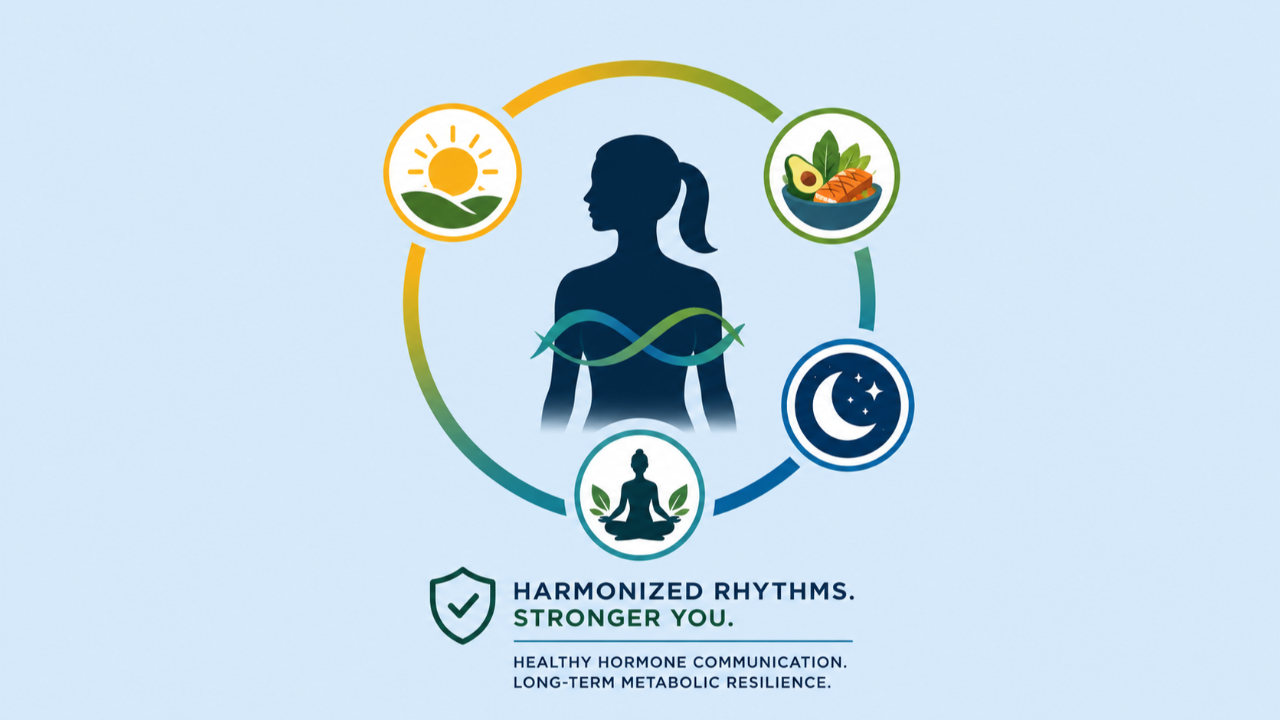
For many people, hormone health becomes a search for the perfect supplement, the perfect lab value, or the perfect treatment plan. It's easy to believe that if we could simply "balance our hormones," everything else would fall into place.
But what if healthy hormones depend less on achieving perfect numbers and more on creating predictable daily patterns?
Throughout this month we've explored hormones through a metabolic lens.
We learned that hormones are messengers, carrying information throughout the body. We discovered how stable blood sugar supports clear hormonal communication, and how the liver and gut work together to process and eliminate hormones once their messages have been delivered.
This week, we're bringing those ideas together by looking at something surprisingly powerful: Your daily rhythms.
The way you wake, eat, move, recover, and sleep sends continual information to every cell in your body. These repeated signals help determine not only how hormones are produced, but also when they're released, how effectively they're communicate, and how well your body adapts to change.
Rather than striving for hormonal perfection, we can support hormonal resilience.
Your Body Runs on Biological Clocks
Every cell in your body contains an internal clock.
Together, these clocks form your circadian rhythm, an approximately 24-hour cycle that coordinates thousands of biological processes, including:
- Cortisol release
- Melatonin production
- Blood sugar regulation
- Insulin sensitivity
- Digestive activity
- Immune function
- Body temperature
- Cellular repair
Think of your body as a symphony orchestra. Hormones are not individual soloists performing independently. Instead, they're musicians following the same conductor. Circadian rhythms help keep everyone playing in time.
When the timing is synchronized, communication flows smoothly.
When timing becomes disrupted, even normal hormone levels may struggle to produce optimal function.
Hormones Are Meant to Rise and Fall
One of the biggest misconceptions about hormones is that they should remain stable throughout the day.
In reality, healthy hormones are dynamic.
For example:
Cortisol naturally rises shortly after waking, helping increase alertness, energy, and blood sugar availability for the day ahead.
As the day progresses, cortisol gradually declines.
Meanwhile, melatonin remains low during daylight hours before increasing in the evening to prepare the body for sleep.
Insulin sensitivity is also influenced by the time of day, which is one reason meal timing can influence metabolic health.
These daily fluctuations aren't signs that hormones are "out of balance." They're signs that your body is functioning as designed.
The goal isn't flat hormone levels.
The goal is healthy rhythms.
Circadian Entrainment: Teaching Your Internal Clock
Our internal clocks aren't isolated from the outside world.
They continually adjust based on environmental signals, a process known as circadian entrainment.
Your body pays attention to cues such as:
- Light and darkness
- Meal timing
- Physical activity
- Sleep and wake times
- Social interaction
- Temperature
- Periods of rest and recovery
These signals help your brain coordinate hormone release throughout the day.
When these cues occur consistently, your internal clocks become synchronized.
When they're highly irregular as a result of late nights, inconsistent meals, frequent travel across time zones, rotating work schedules, or prolonged artificial light exposure, communication between these systems can become less coordinated.
This doesn't mean occasional disruptions are harmful. It simply reminds us that our bodies appreciate rhythm.
Morning Light: One of Nature's Simplest Signals
One of the strongest signals your brain receives each day is natural morning light.
Within minutes of exposure, specialized cells in your eyes send information to a region of the brain called the suprachiasmatic nucleus (SCN), often referred to as the body's master clock.
This tiny group of cells helps coordinate circadian timing throughout the body.
Morning light helps:
- Reinforce healthy cortisol rhythms
- Suppress melatonin at the appropriate time
- Improve nighttime melatonin production later in the day
- Support healthy sleep-wake cycles
- Promote daytime alertness
- Strengthen circadian synchronization
The goal isn't prolonged sun exposure.
Even 10–20 minutes of outdoor natural light early in the day can provide a meaningful signal, especially when your eyes are exposed to natural daylight without looking directly at the sun.
Sometimes the simplest interventions have the broadest effects because they influence multiple systems simultaneously.
Meal Timing Is Information
Food provides nutrients. But it also provides timing information.
Every meal communicates to your body that energy has arrived.
These signals influence insulin, digestive hormones, liver metabolism, and many cellular processes.
While nutrition quality remains essential, when we eat also influences metabolic communication.
For many people, maintaining relatively consistent eating windows helps reinforce healthy circadian rhythms.
Rather than eating continuously throughout the day, allowing blocks of time between meals gives insulin time to lower and return to baseline and support metabolic flexibility.
Likewise, avoiding large meals immediately before bedtime can support digestion and allow the body to shift more effectively toward nighttime repair processes.
Again, consistency often matters more than perfection.
Movement Sets the Tempo
Physical activity is another powerful circadian signal.
Movement improves insulin sensitivity, supports mitochondrial function, enhances circulation, and helps regulate stress hormones.
But movement also reminds your body that it was designed to alternate between activity and recovery.
Not every workout needs to be intense.
Walking after meals.
Gentle strength training.
Mobility work.
Stretching.
Recreational activities you genuinely enjoy.
These all contribute to healthy communication throughout your metabolic terrain.
Movement is most beneficial when it's sustainable.
Recovery Is Part of the Plan
Modern culture often celebrates productivity while undervaluing recovery.
Yet adaptation only occurs when recovery follows stress.
Exercise challenges the body.
Work creates mental demands.
Illness activates immune responses.
Life naturally includes periods of stress.
Healthy hormone systems don't avoid stress.
They respond appropriately.
Then they recover.
Recovery may include:
- Quality sleep
- Relaxation
- Quiet reflection
- Time outdoors
- Supportive relationships
- Prayer or meditation
- Deep breathing
- Enjoyable hobbies
These practices don't eliminate life's challenges. They improve our capacity to respond to them.
What Is Hormonal Flexibility?
One of the most important concepts in metabolic health is flexibility.
Healthy hormone systems are adaptable. They respond to changing circumstances. Then they return toward baseline.
Imagine driving a car. Pressing the accelerator increases speed. Pressing the brake slows you down. You wouldn't want either pedal permanently stuck.
Your hormones function similarly.
Cortisol should increase when you're faced with an important challenge.
Insulin should rise after meals.
Adrenaline should activate during emergencies.
Inflammatory signals should increase temporarily when fighting infection.
Problems often arise when these responses become chronically activated or when they no longer respond appropriately at all.
Hormonal flexibility means your body can:
- Respond when needed.
- Recover afterward.
- Adapt to changing demands.
- Return to balance naturally.
This adaptability is one of the clearest signs of a resilient metabolic terrain.
Rhythm Over Restriction
Many wellness programs focus primarily on what to eliminate.
Instead, consider what you might consistently add.
Morning sunlight.
Regular meal timing.
Daily movement.
Intentional recovery.
Consistent sleep.
These rhythms gently reinforce the biological systems that already exist within you.
None of these habits require perfection. Missing one day doesn't undo months of consistency.
Your body isn't looking for flawless performance. It's looking for reliable patterns.
Small actions repeated day after day often have a greater long-term impact than dramatic changes that are difficult to sustain.
Building a More Resilient Terrain
Throughout this series we've shifted the conversation away from simply "balancing hormones."
Instead, we've explored how healthy hormone function reflects the health of the terrain itself.
Hormones communicate.
Blood sugar provides stability.
The liver and gut help process and eliminate hormonal signals.
Daily rhythms keep the entire communication network synchronized.
Together, these systems help build resilience.
Rather than asking, "How do I fix my hormones?"
Perhaps a better question is: "How can I create daily rhythms that allow my body to communicate more effectively?"
When we consistently support the terrain, we give our bodies the opportunity to do what they were beautifully designed to do:
Respond.
Adapt.
Recover.
And thrive.
Your Terrain Takeaway
Healthy hormones aren't defined by perfection.
They're supported by consistent rhythms, thoughtful recovery, and the remarkable ability to adapt.
Instead of chasing perfect hormone balance, begin by building a lifestyle that gives your body predictable signals every day.
Those simple rhythms may become one of the strongest foundations for long-term metabolic health and resilience.
If you are interested in more information, schedule a free Discovery Call.
Let's stay connected!
Join my free Terrain Wellness Community
or sign up for my mailing list to receive the latest news and updates.
I will never sell your information, for any reason.
