
Hidden Environmental Exposures That Influence Your Terrain
Mar 24, 2026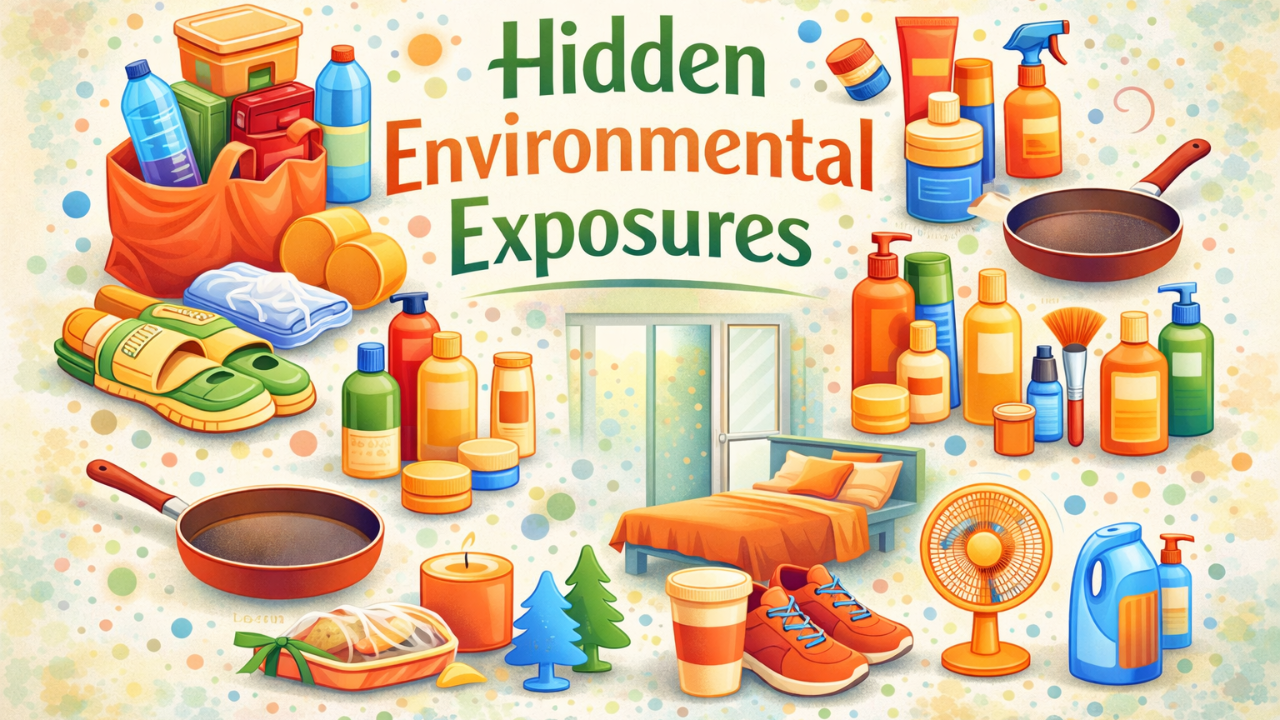
After learning how the body detoxifies, a natural next question is:
Where are these exposures actually coming from in everyday life?
Many environmental exposures are not obvious.
They are part of daily routines, environments, and products we often don’t think twice about.
This can feel overwhelming at first.
But this conversation is not about eliminating everything or creating fear around your environment.
It’s about something much more powerful and supportive:
Awareness.
Because awareness allows for small, thoughtful shifts that can reduce unnecessary exposure over time while still living a full and balanced life.
A Perspective on Environmental Exposures
We all live in environments where some level of exposure is unavoidable.
The goal is not perfection.
The goal is simply to begin noticing where exposures may be occurring and where adjustments feel realistic and can be made.
When combined with the body’s natural detoxification systems, even small reductions in exposure can help support overall resilience.
Common Hidden Environmental Exposures
Pesticides and Herbicides
These compounds are commonly used in agriculture and can be present on conventionally grown produce.
This doesn’t mean fruits and vegetables should be avoided, far from it.
Instead, awareness might look like:
- choosing organic options whenever possible
- washing produce thoroughly
- incorporating a variety of foods rather than relying on the same items repeatedly
Plastics and Food Storage
Plastics are widely used in food packaging and storage.
Certain compounds found in plastics can migrate into food, particularly when heated.
Simple shifts may include:
- using glass or stainless steel containers whenever possible
- avoiding heating food in plastic
- reducing use of single-use plastics
Endocrine Disruptors
Many environmental chemicals can influence hormone signaling in the body. These are often referred to as endocrine disruptors.
They can be found in:
- plastics
- personal care products
- household items
Awareness in this area includes:
- simplifying products used daily
- choosing fragrance-free options when possible
- gradually replacing items over time with safer products
Indoor Air Quality
Indoor air can contain a mix of pollutants from:
- cleaning products
- building materials
- furnishings
- cooking byproducts
Because we spend so much time indoors, this can be an important area of support.
Simple strategies include:
- opening windows regularly
- using ventilation while cooking
- incorporating air filtration where possible with HEPA filters
Personal Care Products
Many products applied to the skin and used daily contain synthetic ingredients or fragrances.
This doesn’t mean everything needs to be replaced at once.
Instead, a gradual approach can be helpful:
- avoiding products that contain parabens and phthalates (known endocrine disruptors)
- reducing the number of products used
- choosing simpler formulations
- selecting fragrance-free options when possible
Heavy Metals
Heavy metals such as lead, mercury, and cadmium can be present in the environment through water, food, or past exposures.
While this topic can feel complex, awareness might begin with:
- ensuring clean water sources with water filtrations systems
- maintaining a varied, nutrient-dense diet
- supporting the body’s natural detoxification systems
Small Shifts, Not Perfection
It’s easy for conversations about environmental exposures to feel overwhelming.
But it’s important to remember:
You do not need to eliminate everything to make meaningful progress.
In many cases, the most supportive approach is:
- choosing one or two areas to focus on
- making gradual changes over time
- supporting the body’s natural detoxification systems alongside these shifts
- apps like EWG, Think Dirty, and Yuka can be helpful tools for evaluating products for safer options and increasing awareness.
Supporting Your Terrain Along the Way
Reducing exposure is only one part of the picture.
Equally important is supporting the body’s ability to process and eliminate what it encounters.
This includes:
- nutrient-dense foods
- adequate protein
- hydration
- movement
- sleep
- stress regulation
When these systems are supported, the body is better equipped to maintain balance, even in the presence of everyday exposures.
A Balanced Approach Moving Forward
This is not about fear.
It’s not about striving for a perfectly “clean” environment.
It’s about understanding that:
Your environment and your internal terrain are constantly interacting.
And through small, consistent, informed choices, you can begin to influence that relationship in a supportive way.
If you’re looking for a space where these topics are explored in a practical, supportive, and non-overwhelming way, my Terrain Wellness Community is a place to continue that conversation.
🌿 You’re always welcome and it's free to join.
If you are interested in more information, schedule a free Discovery Call.
Let's stay connected!
Join my free Terrain Wellness Community
or sign up for my mailing list to receive the latest news and updates.
I will never sell your information, for any reason.
